Programme 2024

TCC2024 · 28–30 October 2024

The programme

Day 1

Monday 28 October

09:00 – 12:30Workshop

That was Then, This is Now – the New Priorities for Coin Issuers

At the Coin Conference in 2017 in Warsaw, the MDC Technical Committee Customer Taskforce held a workshop for national authorities (central banks and finance ministries/treasury departments) to discuss and identify their key priorities for circulating coins. Participants from 23 different countries were asked to rank these priorities in terms of public perception, seigniorage, security, trust, attractiveness, innovation and obligation – with a survey at the start and end of the workshop resulting in a surprising shift of views.

Read more

At the Coin Conference in 2017 in Warsaw, the MDC Technical Committee Customer Taskforce held a workshop for national authorities (central banks and finance ministries/treasury departments) to discuss and identify their key priorities for circulating coins. Participants from 23 different countries were asked to rank these priorities in terms of public perception, seigniorage, security, trust, attractiveness, innovation and obligation – with a survey at the start and end of the workshop resulting in a surprising shift of views.

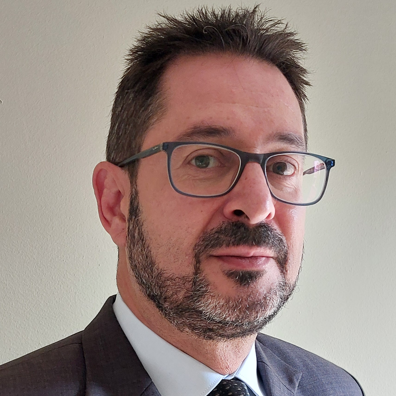
But that was then. What about now? The last seven years have seen a global pandemic, geopolitical and economic turmoil, and the rise of digital payments. Has this changed the perception of national authorities towards cash and coins, and have their priorities changed? If so how, and to what? And what does this mean for issue departments, producers and others in the cash cycle?  The Taskforce (now under the auspices of the International Mint Industry Association and still led by Dieter Merkle of Schuler) will revisit the attributes of coins, involving national authorities in discussion and debate about the importance of coins and ensuring that their changing priorities (if, indeed, these have changed) are understood and acted upon by all those in the coin cycle.

Led by Dieter Merkle, ANDRITZ Schuler Pressen GmbH
13:30 – 17:00Workshop

Commemorative Coins for an International and a Domestic Market

Banknotes are often referred to as a nation’s ‘calling card’. So are coins. Unlike banknotes, there is a large and growing market for commemorative coins not only domestically but internationally that not only celebrate cultural attributes, special events and achievements, but also anchor the value of coins in public consciousness and generate revenues for issuing authorities and mints. At least, that’s the theory. But whilst some commemorative coin issues are spectacular successes, others flop. To avoid this, it is essential to choose themes and motifs that will resonate with collectors. But how to do this?  

Read more

Banknotes are often referred to as a nation’s ‘calling card’. So are coins. Unlike banknotes, there is a large and growing market for commemorative coins not only domestically but internationally that not only celebrate cultural attributes, special events and achievements, but also anchor the value of coins in public consciousness and generate revenues for issuing authorities and mints. At least, that’s the theory. But whilst some commemorative coin issues are spectacular successes, others flop. To avoid this, it is essential to choose themes and motifs that will resonate with collectors. But how to do this?  

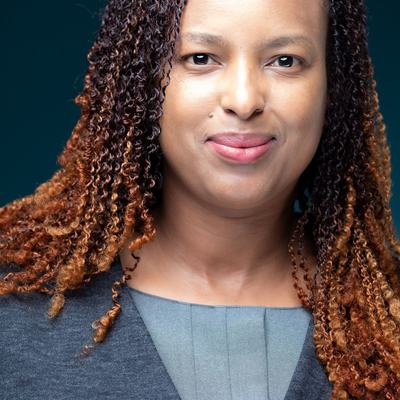
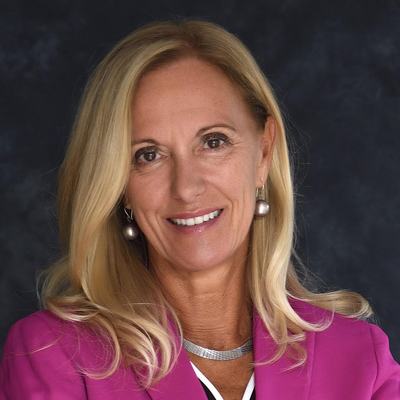
This workshop is aimed at central banks and national mints that are considering producing and distributing commemorative coins commercially. It is about the rules they need to know to enter an international market. In particular, when it comes to the choice of themes and motifs that are possible today, different markets have different preferences and, above all, different taboos. In this workshop, run by Ursula Kampmann of CoinsWeekly, participants will work together to identify the most important markets and connect them with the most popular motifs there, learning about how the collectors market works, how to avoid intercultural sensitivities and differences, new techniques for commemorative coins, and what it takes to offer coins that are interesting to collectors.

Led by Ursula Kampmann, Coins Weekly · Falk Liebnitzky, CIT Coin Invest

Day 2

Tuesday 29 October

Session 1

Setting The Scene – Cash and Coins

08:30 – 10:50
  1. Welcome Helena Adegas, Banco de Portugal (Portugal)
    Helena Adegas
    Helena Adegas
    Member of the Board of Directors of Banco de Portugal since 1 December 2022, having joined this institution in 1985. She was formerly Head of the Markets Department at the Banco de Portugal (2017-2022) and Head of the Risk Management Department (2012-17), Managing Director of the Banco de Portugal’s Sociedade Gestora dos Fundos de Pensões (Pension Funds Managing Company) and Head of the Deposit Guarantee Fund’s Support Unit (2002-12). In the Foreign Department, she was Head of the Reserve Management Division, the Analysis and Forecasting Unit and the Foreign Exchange Unit. Within the Eurosystem, she served on the Market Operations Committee and was a member of the Risk Management Committee and the Working Group on Foreign Reserve Assets, from 2017 until November 2022. From 2011 to 2014, she was a member of the Board of the Portuguese Economists’ Association. She has an Economics Degree from the Universidade Católica Portuguesa, two post-graduate degrees in European Studies and Bank Management from the same university, and an MBA from INSEAD.

    Download the slides PDF · 4.8 MB · delegates only

  2. Overview of the Circulating Coin Landscape Astrid Mitchell, Currency Publications (United Kingdom)
    Abstract

    The market for circulating coins and the industry that supplies them are both in a state of change. Cash in circulation continues to grow, but production volumes have fallen sharply in many countries and some suppliers are exiting the market.

    In the meantime, coin shortages – mainly through hoarding and inefficient circulation – persist. At the same time, demands for sustainability in the production and circulation of coins is growing, adding further pressures, but also opportunities. What lies behind these apparently contradictory trends and, importantly, what do they mean both for those that manage circulation coin and those that supply it? This presentation will look at some of the key factors driving (or putting the brakes) on circulation coins over the last five years or so, thereby setting the scene for the topics and discussions that will make up the following days of the Coin Conference.

    Astrid Mitchell
    Astrid Mitchell
    Astrid Mitchell is Chief Executive of Reconnaissance International. After gaining a degree in politics at Durham University, Astrid began her career in the industry as a researcher and analyst in the M&A department of De La Rue in 1983. She subsequently worked in a variety of marketing positions for the company before joining Applied Holographics (now OpSec) as Marketing Director. She then joined Security Printing Systems, the UK passport printer, and its parent, German banknote and passport printer Bundesdruckerei, working in marketing and the international expansion of its new business groups, including border management, biometrics and the Authenticare brand protection division. She joined Reconnaissance in 2002, and was responsible for the inception and launch of Currency News in 2003, a joint venture publication that covers currency (banknotes and coins) from cradle to grave. She is the Editor of Currency News, and Managing Editor of its sister publication Cash & Payment News. Astrid was also responsible for the company’s expansion into tax stamps and identity and is a regular contributor to Reconnaissance’s other monthly publications covering authentication, ID and secure documents, tax stamps and holography. She is also Conference Director for the biennial Coin Conference. Her particular strengths are strategic development, business development, marketing and communications.

    Download the slides PDF · 1.4 MB · delegates only

  3. Cash, Cryptos, CBDC: What is Money? Marc Schwartz, Monnaie de Paris (France)
    Abstract

    Money is usually defined by its three roles: unit of account, means of payment and store of value. In this sense, “moneys is what money does”. But money is also a political and social institution. To create trust, public authorities guarantee public money (issued by the central bank) as well as private money (issued by commercial banks). Cash is the only form of public money available to the citizens but represents less than 10% of the monetary supply.

    The end of the cash era has been prophesized many times but has yet to be seen. Cash in circulation is slowing down in developed countries but remains quite dynamic in many countries (mostly non-OECD). Cash is certainly losing ground in transactions but remains the main means of payment in numerous areas and is increasingly used as store of value. In France, despite the growing popularity of contactless and smartphone payments, there is a clear rejection of a cashless world.

    With money becoming more and more digital, can cryptocurrencies compete with “real money”? There are becoming more and more popular but do not fulfil the three functions of money, especially the core of what money is: a generally accepted means of payment. Central Bank Digital Currencies, on the contrary, would be a new form of public money, but their introduction to the public still seems to be far off.

    Marc Schwartz
    Marc Schwartz
    Marc Schwartz, born in 1963 in Paris, is Chairman and Chief Executive Officer of La Monnaie de Paris (National French Mint). He was appointed by decree of the French President, Emmanuel Macron, in November 2018 and reappointed in April 2022 He is also Senior Counsellor at the Cour des Comptes (French Court of Audit) and a lecturer in media and cultural industries economics at Sciences Po Paris. Marc Schwartz started his career as an Auditor at the Cour des Comptes in 1988 and joined the Treasury Department in 1992 before his appointment as Economic and financial Counsellor for South-East Asia at the French Embassy in Singapore in 1994. He was advisor to the Minister of Economy, Finance and Industry and the Secretary of State for Budget from 1997 to 2000. He then joined France Télévisions, as Chief Financial Officer, before being promoted to Deputy Chief Executive Officer. In 2010, he became a partner withing the audit and consulting firm Mazars, in charge of Public Sector and Media. He returned to the Cour des Comptes in 2014 and has carried out numerous official missions. From May 2017 to January 2018, he was Chief of Staff to the Minister of Culture. He holds a bachelor’s degree in economics and public finance (Sciences Po Paris) and a master’s degree in Corporate finance. He also graduated from Ecole Nationale d’Administration, the French School for Public administration. ​

    Download the slides PDF · 641.8 KB · delegates only

  4. Recent Coin and Currency Matters: A EU Commission Perspective Irina Stoicescu, European Commission (Belgium)
    Abstract

    In an unprecedented political and economic landscape, what is the state of play of the euro coin market and policy agenda?

    This presentation focuses on the recent EU coin and cash policy developments –
    achievements, ongoing tasks, and way forward – while acknowledging the current challenges in access to and acceptance of cash, as well as cash reliability.

    Irina Stoicescu
    Irina Stoicescu
    I have been working with euro coin matters for more than 15 years, relishing the challenges of a great variety of tasks in coin and cash policy development, implementation, and coordination. My current role as a Policy Officer at the European Commission, Directorate General Economic and Financial Affairs, is to contribute to policy development in relation to euro coin and euro cash matters, to monitor the implementation of legislation on technical specifications of euro coins and on the cash in transit, as well as the implementation of the Monetary Agreements with third countries, and to coordinate the practical aspects of the changeover to the euro in acceding EU Member States. I hold a master’s degree in political sciences at the University of Bucharest.

    Download the slides PDF · 361.1 KB · delegates only

  5. Analysis of European Legislations and Proposals in Favour of Cash Access and Acceptance Martina Horakova, International Mint Industry Association (France)
    Martina Horakova
    Martina Horakova
    Martina Horáková is the Managing Director of International Mint Industry Association (IMIA), an advocacy for cash and coin access and acceptance. In her role as the managing director is leading the association strategically and operationally with vision, and leads policy research and news/media analysis and development of IMIA’s key advocacy agenda, position papers and educational stakeholder projects. Martina has over 15 years of experience as central banking and regulatory specialist and previously worked for a decade at Central Banking Publications, before founding her own consulting and research company, focusing on cash, digital payments and central bank digital currency. She has produced numerous analytical articles, as well as a book ‘Financial independence and accountability’ for central banks. She studied economics at FU Berlin and holds an MSc in development economics from SOAS University of London.
Session 2

Circulation – The Issuer Perspective

10:50 – 13:45
  1. Ongoing Issues with U.S. Coin Circulation Turner Angell, Federal Reserve Financial Services (United States of America)
    Abstract

    The COVID-19 pandemic created an unprecedented disruption to coin circulation patterns in the United States. Similarly, the pandemic changed the way many Americans use cash as a payment instrument. This topic will share insights on current cash usage from the Federal Reserve’s 2024 Diary of Consumer Payment Choice and explore the implications for U.S. coin demand and circulation patterns. Did the U.S. economy reach a “floor to cash” in 2020, and if so, what does that mean for current and future coin use? Do the current levels of coin demand represent a new normal, or will coin usage return to the long-run average volumes that were the norm pre-pandemic?

    Turner Angell
    Turner Angell
    Turner Angell is Assistant Vice President for the FedCash Services Group within Federal Reserve Financial Services. He is responsible for national currency and coin inventory management and distribution, including business continuity planning and risk management, across 200+ distribution locations (FRB centers, cash depots, and coin terminals) that service both domestic and international markets. He works closely with all twelve Federal Reserve Banks, the Board of Governors, and other stakeholders within the U.S. cash supply chain to ensure the Federal Reserve’s cash business continues to meet its mission. Turner holds a bachelor’s degree in economics from Colorado College, a master’s degree in international economic policy from Columbia University and is a graduate of the Pacific Coast Banking School.

    Download the slides PDF · 4.8 MB · delegates only

  2. The Role of Banco de Portugal in Euro Coin Circulation in Portugal Rui Manuel Monteiro, Banco de Portugal (Portugal)
    Abstract

    This presentation explores the Portuguese central bank’s pivotal role in coin circulation, from its responsibilities within the coin lifecycle to the supervision and compliance checks of cash-in-transit companies responsible for delivering cash to retail or bank branches.

    We will also emphasis the steps taken to improve operational efficiency and sustainability, as well as Banco de Portugal’s four-pillar blueprint on protecting the euro. This strategy focuses on training for all stakeholders and entails close collaboration with law enforcement to safeguard the integrity and reliability of the coins in circulation.

    Rui Manuel Monteiro
    Rui Manuel Monteiro
    Holding a MSc in Chemical Engineering, Rui Monteiro began his career at Amorim Cork Composites, part of the world's leading cork company, as a product development engineer, carrying out lab testing, pilot production, and large-scale industrial trials for state-of-the-art sustainable products. In 2013, he made a career shift to central banking, focusing on banknote quality in production, currency (re)circulation and, more recently, cash counterfeiting. His role also includes overseeing quality control for cash handling within BdP cashcenters – while managing ISO 9001 certification of the main cash center – and verifying CITs recirculation compliance with the applicable regulatory framework.

    Download the slides PDF · 2.1 MB · delegates only

  3. Coin Circulation and its Impact on Cash Cycle Efficiency: The Euro Area Perspective Antra Trenko, The Economic and Financial Committee (Latvia)
    Abstract

    The presentation “Coin circulation and its impact on cash
    cycle efficiency: the Euro Area perspective” will focus on the efficiency and
    effectiveness of the coin circulation in the Euro Area at large.​

    The recent payment trends across the board show a clear shift of customer
    preferences to cashless and digital means of payments. However, the European
    authorities have stated, that cash is there to stay, so it is all the more
    important that the cash and its infrastructure can easily be used by the
    public. To achieve that, the stakeholders must work together in an efficient
    way.

    The author will therefore examine the current key obstacles to making coin
    circulation more efficient, in particular in the areas of coordination and
    procurement. In addition, the author will examine the available possibilities
    for further improvement of the cash cycle from the stakeholders’, customers’
    and policy makers’ point of view, always remembering that ‘helicopter minting’
    is neither a sustainable nor a practical solution towards the improvement of
    cash cycle efficiency.

    Antra Trenko
    Antra Trenko
    Ms Antra Trenko is the Chair of the Euro Coin Sub-Committee (ECSC) since June 2022. The ECSC is a sub-committee of the Economic and Financial Committee (EFC)[1]. The ECSC is the focal point of euro coins related issues in terms of information sharing and timely preparation of policy decisions for matters falling under the competence of the EU Ministers of Finance, while respecting the institutional set up and the existing legal provisions of the EU. The members of the ECSC are Treasuries, Central Banks and Mints. Ms Trenko has been working in the Central Banking for nearly two decades now, enjoying a wide range of duties at the Central Bank of Latvia, mostly within the international policy agenda. For the past 8 years she has been the diplomatic representative of the Bank of Latvia at the Permanent Representation of Latvia to the EU.

    Download the slides PDF · 469.6 KB · delegates only

  4. BSP Coin Recirculation Program: Integrating Digitalization and Financial Inclusion Rosabel B Guerrero, Bangko Sentral ng Pilipinas (Philippines)
    Abstract

    Coin recirculation is a perennial problem that is facing almost all countries. As coins are left idle at home because some consumers find it inconvenient to carry them or consider them of little value as a form of payment, governments continue to incur production costs to meet the demand for coins by the public.

    In the Philippines, coins in circulation reached 41.0 billion pieces as of 30 June 2024, with each Filipino having approximately 376 pieces of coins. This is more than three times the average of 121 coins per capita in 2005.

    Despite having an adequate supply of coins, a perceived “artificial coin shortage” has been reported in certain areas of the country.  Thus, the Bangko Sentral ng Pilipinas (BSP) embarked on the Coin Deposit Machine Project as part of its coin recirculation program. The project is considered an innovation as it incorporated financial inclusion and digitalization.  Coins deposited can be exchanged into a shopping voucher of a participating retailer or credited to the e-wallet of the depositor, the latter being the highly preferred option of depositors. Meanwhile, the coins collected are distributed to the retailers for recirculation.  

    Rosabel B Guerrero
    Rosabel B Guerrero
    Ms. Rosabel B. Guerrero is the Managing Director of the Regional Operations Sub-Sector (ROSS), which oversees the management and operations of the 25 Regional Offices and Branches of the Bangko Sentral ng Pilipinas (BSP) located in key cities and provinces in the Philippines. As the head of ROSS, she takes the lead in further strengthening the presence of the BSP in the regions by ensuring the delivery of the sub-sector’s mandated services that include currency operations, economic and financial learning, and regional economic surveillance. Prior to her appointment as head of the ROSS, she was deeply involved in strategic communication and investor relations, international relations, and economic statistics.

    Download the slides PDF · 1.7 MB · delegates only

  5. Bridging Art and Science to Deliver Innovative Coinage Solutions Marie Lemay, Royal Canadian Mint (Canada)
    Abstract

    The Royal Canadian Mint is a world leader when it comes to its efficient, cost-effective and responsible production of circulation coins and coin management system, which are at the heart of its core mandate to produce and distribute Canada’s coinage. 

    With the rise of digital payments, its ability to carry out this role has become more important than ever to Canada’s economy and society.  Through innovation, a comprehensive ESG commitment, close collaboration with cash ecosystem partners, and a 24/7, 360-degree view of coin supply and demand, the Mint bridges art and science to creatively and methodically cover the full spectrum of delivering and managing coinage solutions for Canada and the world.

    Marie Lemay
    Marie Lemay
    Marie Lemay is the President and CEO of the Royal Canadian Mint, a position she has held since 2019. Before assuming her position at the Mint, Ms. Lemay served as Deputy Minister and Deputy Receiver General for Canada at Public Services and Procurement Canada. Ms. Lemay also served as Deputy Minister and President of the Canada Economic Development Agency for Quebec Regions, which promotes the long-term Economic development of the regions of Quebec. In 2012, she was Associate Deputy Minister at Infrastructure Canada, the main department responsible for federal efforts to enhance Canada's public infrastructure. From January 2008 to 2012, Ms. Lemay was the CEO of the National Capital Commission in Ottawa. Prior to that, Ms. Lemay was the CEO of Engineers Canada, where she led a number of international initiatives and oversaw several mutual recognition agreements. Recently, Ms. Lemay was elected as the first Chairperson of the Mint Directors Association. In 2023, she was awarded an Honorary Doctorate from the University of Ottawa, her alma mater, for her substantial contribution to the field of engineering and to society at large. Ms. Lemay is a member of the Ordre des ingénieurs du Québec and of Professional Engineers Ontario, as well as a Fellow for both Engineers Canada and the Canadian Academy of Engineering. She also serves as a board member of the Richelieu Hardware Ltd. Board of Directors.

    Download the slides PDF · 57.3 MB · delegates only

Session 3

Circulation – The Market Perspective

13:45 – 16:10
  1. Making the Coin Cycle More Efficient by Improving Circulation Keith Williamson, Crane Payment Innovations (United Kingdom)
    Abstract

    It is clear, that one of the biggest issues for Central Banks, in relation to coin, is that circulation is low.  This causes significant inefficiency in the cycle, as a result we see unnecessary expense to Mint new coin, availability issues (in time of crisis) and inflated CIT costs due to suboptimal use of coin in the retail sector.  This presentation will provide a summary of some practical initiatives to encourage greater coin recirculation and improve the overall efficiency in the coin cycle.

    Keith Williamson
    Keith Williamson
    Keith has over 15 years of experience in the Cash Industry, having held Senior positions at De La Rue, Cash Processing Solutions Ltd and most recently with Crane Payment Innovations, the focus of these roles have been on developing and delivering innovative solutions to customers on a large scale basis. During his career in the Cash Industry, Keith has worked extensively with Central Banks and Commercial organisations around the globe, building a deep knowledge and understanding of the cash cycle and its stakeholders. Prior to the Cash Industry, Keith spent 10 years in the Electronic component distribution industry working closely with Blue chip companies like Samsung, Motorola, and Philips Electronics

    Download the slides PDF · 1.7 MB · delegates only

  2. Optimising Coin Circulation in the Netherlands Anne Richard Schaafsma, Brink's (Netherlands)
    Abstract

    Geldmaat and Brink’s have created a sustainable solution for the coin circulation process in The Netherlands. The solution optimizes the coin recirculation process, guaranteeing ‘access to cash (coins)’ for the Dutch society and minimizing the cost of circulation.

    Geldmaat, the Dutch ATM pooling organization, has outsourced the full solution to Brink’s. Brink’s has deployed 750 Coin deposit and coin roll dispensers installed at retailers.

    Costs for coin handling have been reduced significantly, end-users are happy with the high uptime and availability of the coin devices (which is often difficult to achieve for coin devices) and the Dutch National Bank is satisfied with the amount of coins being returned to circulation without the need for constantly producing new coins.

    In the presentation we will explain the solution. There is a lot of interest in this
    Dutch solution, from other banks and ATM pooling organizations.

    Anne Richard Schaafsma
    Anne Richard Schaafsma
    Anne Richard Schaafsma, Head of Business Development (global), ATM Managed Services, Brink’s Inc. With more than twenty years’ experience in CIT and ATM outsourcing I’ve been closely involved in the transformation process the cash cycle is undergoing. After fulfilling various roles like MD, banking sales- and solutions development director, I’m now responsible for Brink’s ATM Managed Services business development. Brink’s is a global leader in ATM Managed Services. We manage more than 300.000 ATM’s worldwide. Outsourcing the operational burden of managing ATM fleets, so banks can reallocate capital and manpower to digital initiatives accelerating the digital transformation.

    Download the slides PDF · 4.7 MB · delegates only

  3. Changing the World – One Cent at a Time Scott Hutchings, Global Coin Solutions (United States of America)
    Abstract

    Every Mint, Central Bank, and Monetary Authority talks about Sustainability.

    The coin industry focuses on domestic challenges, from mining and minting to circulation and re-circulation.

    What happens when coin travels to another country?

    We go on vacation and bring coins home with us, either as a souvenir or as change that we couldn’t or didn’t spend.

    Every year, more coins are introduced into circulation to replace those coins.

    **THAT is not a sustainable solution.​**

    There is a solution: **Foreign Currency Fundraising.​**

    It has been used by charities in the U.K. for decades. There are charities in Ireland and New Zealand that are funded exclusively by the ask of foreign currency.

    * The charity collects it

    * The charity works with a company that handles foreign
    coin

    * The coin is sorted and repatriated for re-circulation

    * The value of the coin comes back, all fees are paid,
    and the charity makes money

    * The foreign coin “pays” its own way back home

    The industry should include a sustainability message for the public to donate their foreign coin to charity, any charity.

    With the introduction of GCS Japan, Global Coin Solutions is building a global logistics network to support the repatriation of coin, effectively, efficiently, and with less cost.

    Charity wins and sustainability in the coin industry improves.

    Scott Hutchings
    Scott Hutchings
    Scott Hutchings is the Founder & President of Global Coin Solutions, specializing in the processing and repatriation of mixed / foreign currency for charity. Scott has been handling foreign currency for the past 9 years and began Global Coin Solutions in February of 2015. Global Coin Solutions was founded on 2 principles: to help charities and putting Canadians to work. The formula is straightforward; the more charities we help, the more money is raised, and the more people it takes. Global Coin Solutions hires people with Autism for their unique abilities. Global Coin Solutions has processed over $16.0 MILLION and returned over 200,000kgs of mix / foreign currency to circulation. None of the currency we handle ends up in landfills or melted down, making it an environmentally friendly initiative. Global Coin Solutions focuses on creating a market for fundraising within the charity sector. We also support banks, armored car companies, domestic coin processors, and transit organization, among others by processing the foreign currency they encounter and returning value in domestic funds.

    Download the slides PDF · 1.3 MB · delegates only

  4. Recirculation of Potted Up Money and Cash Stuck Abroad Mario Van Poppel, Leftover Currency (United Kingdom)
    Abstract

    There were never more Euro coins in Belgium than today. And still, local tradesmen complain about a severe lack of 5c, 10c, 20c and €2 coins. How is this
    possible?

    At Leftover Currency, we understand what’s going on here. Two things, to be precise: Money potted up at home and leftover travel money stuck abroad. It’s what causes any circulatory system to fail: blockages and leaks. The average British household has £65 worth of leftover currency somewhere in a drawer at home. A mixture of domestic and foreign banknotes and coins, gathering dust.

    How can we improve the circulation of cash? By reducing these leaks and blockages. In this session we will explore how at Leftover Currency we have brought back into circulation hundreds metric tons of British currency, and how we have repatriated containers of coins and pallets of banknotes to the four corners of the world. We will look at roadblocks and opportunities. We highlight the importance of AML due diligence, the pitfall of salvaged coins from the recycling industry. And we will cover in detail the important role charities and fundraising play in the recirculation of cash.

    Mario Van Poppel
    Mario Van Poppel
    Mario Van Poppel founded Leftover Currency in 2012 to fill a gap in the crowded travel money market: the exchange of foreign coins, out-of-circulation banknotes and obsolete currencies. Mario moved to the UK from Belgium in 2010 while working for Thomas Cook Group as a marketing analyst . Mario set up a high-volume cash processing centre in Datchet, Berkshire, where mixed banknotes and coins are sorted and prepared for repatriation to their countries of origin. In addition to anyone who has leftover currency in their drawers, customers include airlines, airports and charities, who raise funds through currency donations. In 2019, Mario founded the Manor FX travel money brand, focussed on exotic currencies from Albania to Zambia. Mario has a Masters’ degree in Applied Economics from the University of Antwerp, Belgium.

    Download the slides PDF · 3.9 MB · delegates only

  5. Robotics, AI and Coin Recirculation Eric Sanquer, Proditec (Spain)
    Abstract

    5 years ago the idea of using artificial intelligence for coin sorting purposes was science fiction, yet here we are, artificial Intelligence has been used industrially for the last 2 years in coin blanks inspection machines. Now we are launching an AI powered robot.​

    Is there also an application in recirculation for artificial intelligence, for robotics or for artificially intelligent robots?​

    Eric Sanquer
    Eric Sanquer
    Eric Sanquer is Sales Manager at PRODITEC, he has been working as a field engineer in different sectors such as textile industry, food packaging, automotive, digital printing, metal extrusion, pharmaceutical industry and of course coin industry. He has been working with PRODITEC since 2002.

    Download the slides PDF · 11.3 MB · delegates only

Session 4

Sustainability

16:10
  1. Coins and the Environment John Winchcombe, Currency Publications (United Kingdom)
    Abstract

    This talk will review the environmental impact of friction in coin circulation. Whether from inefficiency or the challenges of maintaining coin returns and flow, there are a range of effects that arise if the cash cycle does not work well.  This paper will consider a number of different responses and consider options to manage things differently.

    John Winchcombe
    John Winchcombe
    John Winchcombe has worked with central banks on the design, issue and circulation of banknotes from joining De La Rue in 1988 to today. His De La Rue career has included working in banknote paper mill and print works, responsibility for new product development of paper, polymer, print, machine readable and optical features for banknotes and marketing strategy. John’s last job at De La Rue was four years as Product Development and Marketing Director for the Currency business. In 2016, after leaving De La Rue, John worked for CCL Secure and in 2018 he started work as a consultant firstly for 7 Layer Solutions and then also with Reconnaissance International. John’s work with 7 Layer has been working with central bank issue departments to develop a market leading data analytic tool based on serial number reading to understand cash usage and performance. John’s work for Reconnaissance is to bring this knowledge of central banks, banknote manufacture, banknotes and the entire cash cycle into the business, including putting this into the wider payment context as alternative and digital payment methods develop and grow in popularity.

    Download the slides PDF · 1.3 MB · delegates only

  2. Environmental Impact of Cash Versus Digital Payments Pascal Rencker, The Mint Directors Working Group (MDWG) (France)
    Abstract

    More and more news and advertising campaigns come up with misleading information about the use of cash, the cost of cash and above all, the impact of cash on the environment.

    Considering these facts the MDWG (European Mint Directors Working Group) decided to team up with the ICA (International Currency Association) to get an all-embracing picture regarding the sustainability of cash and its digital payments counterpart.

    In a unique Research Study which compares the sustainability of existing cash payments (banknotes and coins) and digital payments (debit and credit cards payments, mobile payments), this work will cover the large European EU27 area and its 450 Million population and propose an innovative and board approach with the Carbon Footprint report methodology.

    Pascal Rencker
    Pascal Rencker
    Pascal Rencker has been working as President of the Mint Directors Working Group (MDWG) since 2016. This professional group gathers the European Mints as industrials and producers of coins for the 460 Million people of the EU27. The activities of the group are ranging from ‘’best practices exchange’’ to ‘‘market studies’’ or ‘‘research studies on technical, environmental or economical topics’’ of the mint industry. Head of Innovation and R&D, and International Affairs, at the Monnaie de Paris, and previously for many years Industrial Director, with operational and strategic responsibility for the end-to-end delivery to customers on 4 continents. Pascal's background and expertise are in the metal forming industries, starting from gold and silver refineries up to copper based cold metal rolls, or even jewel makers. International sourcing and commercial global experience are also part of his skills, while serving Monnaie de Paris, one of the oldest institutions in the world, with its 1155 years, which entered in digital age by proposing its broad panel of products and services to over 40 countries in the world.

    Download the slides PDF · 1.4 MB · delegates only

  3. Generating Revenue from Recycling Simon Billingham, Arrandene MFG (United Kingdom)
    Abstract

    Metal recycling is one of the world’s oldest sustainable practices, historically driven by financial motives rather than environmental concerns. As central banks and mints become increasingly aware of their environmental impact, the undertaking of coin recycling projects not only supports sustainability but also offers a significant revenue-generating opportunity.

    The presentation will outline the environmental benefits of coin recycling and provide guidance on how central banks and mints can implement these projects to optimise both sustainability and financial outcomes.

    Simon Billingham
    Simon Billingham
    Simon is co-owner and Managing Director of Arrandene MFG. Arrandene MFG provides a unique and specialised coin recycling service, helping central banks and mints to dispose of old and obsolete coins. Simon has spent his entire career in the metals and minting industry and has worked with a large number central banks and mints around the world. He looks forward to meeting the delegates and sharing his passion for metals and recycling.

    Download the slides PDF · 1.4 MB · delegates only

  4. How can Coin Production and Destruction be More Sustainable Daniel Sheffer, M.One (Switzerland)
    Abstract

    ​

    Daniel Sheffer
    Daniel Sheffer
    Daniel Sheffer, a graduate in business administration, began his career in the means of payment sector at the age of 28, when he took over the Board of Directors of Deutsche Nickel AG. Since then he has actively helped to shape the market. He is one of the few true all-rounders who really know the means of payment market. In 2004, he founded Amera together with Martin Engler. In 2010, he sold his shares in the company. Today, Daniel Sheffer heads up the sales department of M.One and travels around the world to offer customers face-to-face service. He is a strategic thinker who considers not only the future of his own company, but also the concerns facing the means of payment market in general.

    Download the slides PDF · 2.2 MB · delegates only

  5. Dealing with Mutilated and Deliberately Altered Coin and Saving Taxpayers Millions Claus Fischer, Austrian Mint (Austria)
    Abstract

    Circulation of unfit coins are difficult to use, particularly in coin-operated machines, and may create confusion for users as to the authenticity and validity of those coins. Unfit coins should therefore be removed from circulation.

    Due to statutory requirement the Münze Österreich AG had to accept coins unfit for circulation per se and exchange them for legal tender. In the last two decades Austria was flooded with so called “recycled coins”, burned, tarnished and bent.

    Professional dealers bought these “coins” for the pure weight price and brought them to Austria for reimbursement. I was a huge and profitable business.

    The reimbursement of these deliberately altered coins was very expensive, the costs and damage were millions of euros.

    With the change of the Austrian Coinage Act 2016 Austria stopped this procedure in line with European laws and guidelines.

    Claus Fischer
    Claus Fischer
    Claus was born 1966 in Vienna; Austria. After graduating from high school in 1985 he studied Law in Vienna and Salzburg. Finishing with a Doctor of Law Degree in 1991. He subsequently worked for 2 years at the Federal Court of Vienna. Deciding to leave the legal world behind him he started at the Central Bank of Austria in the Trading and Strategy Department. Working in Vienna, New York and London as an Investment Officer. In 2004 he left the Public Sector to join DZ Bank and finally HSBC working as Managing Director, Global Markets. Returning in 2009 to the Central Bank as Chief Representative of the Bank in London. In 2011 he was appointed B2B Sales Director at the Austrian Mint.

    Download the slides PDF · 861.3 KB · delegates only

Day 3

Wednesday 30 October

Session 5

Production, Inspection, Authentication & Innovation (Part 1)

09:00 – 11:05
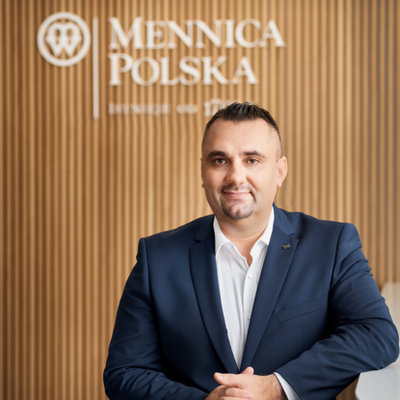
  1. Pushing the Boundaries in Minting Siemowit Kalukiewicz, Mennica Polska (Poland)Łukasz Karda, Mennica Polska (Poland)
    Siemowit Kalukiewicz
    Siemowit Kalukiewicz
    Mr Siemowit Kalukiewicz graduated diploma in Organization of Production of Faculty of Production Engineering division from Warsaw University of Technology. Joined the Mint of Poland in 2004 as a Manager of Production Organization and Technical Department, at the beginning responsible for production preparation, organization of production, engineering support of the production and designing. Later achieving the business successes, concentrated always on innovation and improvements while gaining extensive experience he climbed the next career ladder as Production Director, then Chief Operating Officer becoming responsible for all production and logistic activity in the Mint. Finally in 2022 appointed as Member of the Management Board becoming co-responsible for all activities of the Mint of Poland.
    Łukasz Karda
    Łukasz Karda
    Highly analytical and results-driven production manager with 18+ years of experience managing day-to-day operations and leading teams to improve productivity, safety, and quality in the monetary production industry. Proven track record of implementing innovative technical solutions and driving continuous improvement initiatives to achieve business goals. An enthusiast of innovative technologies, methodologies, and processes that streamline production activities.

    Download the slides PDF · 10.6 MB · delegates only

  2. Advancing Hallmarking: The Future of Unique Identification for Precious Metals Bruno Patrão, Imprensa Nacional Casa da Moeda (INCM) (Portugal)
    Abstract

    The hallmarking of precious metals has been a legally regulated process in Portugal for over 125 years, traditionally involving the punching of objects to mark them with identifiers corresponding to their metal type and legal fineness. This method has also been extended to the marking of other objects, such as artifacts of special interest, including works of art and auctioned items. Modern advancements have introduced laser marking, which allows for the precise marking of delicate surfaces without causing material damage.

    In this presentation, we will introduce a ground-breaking technique for marking precious metals. Our technology encompasses two different methods: a laser-based technology with unique curves engraved on the surface of the piece and a secondary process that incorporates diamond powder with reflective properties, which is then punched into the metal, resulting in a unique and stable identification for each piece.

    Bruno Patrão
    Bruno Patrão
    Bruno Patrão has a master's degree in Visual Information Technologies from Department of Electrical and Computer Engineering at University of Coimbra and is finishing his PhD in Electrical and Computer Engineering. His doctoral work focuses on the induction and detection of emotional states in simulated virtual and augmented reality environments as well as in surveillance systems. His interests include Computer Vision, Augmented/Virtual Reality, Physiological Data Analysis, Interactive Systems, Computer Graphics, Mobile Applications and IoT. He is Innovation Manager in the Innovation Lab at the Portuguese Mint and Official Printing Office (INCM-LAB) with an extensive professional experience in the field of innovation, having participated in several projects in his area of expertise. He has co-authored multiple papers and is inventor of two patents.
  3. Revolution in Laser Engraving with Ultrashort Pulse Technology Alexander Aminidis, ACSYS Lasertechnik (Germany)
    Abstract

    World Premiere – Even back in the time of manual hand engraving, a technique has been used that is still to this day is common in modern machining – and now it finally finds its way into the world of laser technology.​

    Through the combination of traditional toolpath strategy, paired with unique laser technology, innovative thinking and modern software solutions, ACSYS has once again managed to bridge the gap between both worlds to create value for its customers.​

    Be there when we lift the curtain and show the Mint industry how to drastically reduce engraving time with Ultra Short Pulse Technology.​


    Alexander Aminidis
    Alexander Aminidis
    With a master's degree and multiple awards in hand-engraving, working in the past for a private Mint, I have gained expertise in design and all Mint & Print production processes. With over a decade at ACSYS Lasertechnik, I merged these traditional skills with cutting-edge laser technology. As Head of Business Unit for Mint & Print, my team and I focus on innovation and customer success in this vital market.

    Download the slides PDF · 4.4 MB · delegates only

  4. Transforming Production: Solutions for Process Reliability, Enhanced Efficiency and Sustainability Dieter Merkle, Schuler Pressen (Germany)
    Dieter Merkle
    Dieter Merkle
    Dieter Merkle has been working with Schuler Presses since 1975. Today Dieter Merkle is the Director Global Minting of the Schuler Group. Besides, he has been in the board of Schuler India since 2004 and again Chairman since January 2020. Dieter Merkle has been active member of the Mint Directors Association (MDA) Technical Committee and has also been entrusted with the organization and moderation of the Technical Forum of the World Money Fair since 2004. Since 2016, Dieter Merkle has been the convenor of a Customer Task Force to create awareness in the industry and connect to the customer base. In April 2024, same Customer Task Force was transferred to the International Mint Industry Association (IMIA). Starting 2017, Dieter Merkle has been representing the Schuler Group within the International Currency Association, since May 2017 as a board member. ​

    Download the slides PDF · 7.5 MB · delegates only

Session 6

Production, Inspection, Authentication & Innovation (Part 2)

11:05 – 13:40
  1. All Round Inspection Ingo Loeken, Spaleck Oberflächentechnik (Germany)
    Abstract

    The fundamental goal in the coin business to produce and maintain highest quality levels for coins in circulation. In order to achieve this goal optical vision systems are used to inspect the coins and coin blanks during the production process and can be used to inspect fit and unfit coins in circulation. Spaleck Oberflächentechnik GmbH & Co. KG is offering optical validation technology with this regard, called Spaleck Inspection Technology (SIT).

    SIT is consisting of the mechanical transportation system of
    items and the camera and analysing module. Both can be adjusted and adapted on specific customer needs. The system meets the market need for integrated
    production systems, where quality control is a self-evident part of production,
    and it is able to deliver a 100% control including full digital documentation.

    SIT is not only capable to use normal light but also laser analysis in order to perform 2D and even 3D camera inspection technology. 3D technology is able to measure exact geometrical features of a workpiece in milliseconds from all dimensions of a workpiece. Despite the coin obverse and reverse, SIT offers additionally the optical edge inspection of coin and coin
    blanks as well.

    Ingo Loeken
    Ingo Loeken
    Ingo Löken joined Spaleck as an apprentice to become a millwright from 1989 to 1993. Subsequent after his practical education, he went to the University of Osnabrück to become an engineer for material science. Ingo Löken worked for 11 years at the company Quadrant. He covered production and sales positions in the field of medical polymers. Since 2009 he is acting as a Sales Engineer for the minting industry within the Spaleck organization.

    Download the slides PDF · 6.5 MB · delegates only

  2. Integrating Holograms into Coins Robert Dvořák, IQ Structures (Czechia)
    Robert Dvořák
    Robert Dvořák
    Robert has been working on the development of optical security features since 2008. He has been participating in the implementation of DOVIDs into polymer banknotes and has developed a unique technology for the integration of optical security features into polycarbonate documents. His team is currently working on the development of materials that will enable a major increase in the complexity of optical protection of identity documents as well as banknotes. ​

    Download the slides PDF · 4.9 MB · delegates only

  3. Harnessing AI for Precision and Creativity: The Next Frontier in Coin Design Robert Newman, Carveco (United Kingdom)
    Abstract

    Harnessing AI for Precision and Creativity: The Next Frontier in Coin Design, will explore the potential of artificial intelligence (AI) in revolutionising the coin minting industry. This talk will delve into how AI can decode cultural narratives, historical symbols, and contemporary trends to create innovative and culturally resonant coin designs. We will examine the practical applications and current challenges of AI in coin design, including its role in, generating 3D models and data analysis. Additionally, we will discuss AI’s potential in error forecasting and improving product quality, positioning it as a crucial tool for the future of the minting industry. Join us to discover how merging AI technology with traditional craftsmanship can push the boundaries of creativity and precision in coin manufacturing.

    Robert Newman
    Robert Newman
    Robert Newman is the Managing Director of Carveco, formerly known as ArtCAM. Since 2010, he has been actively involved in the minting industry, specialising in coin design. Robert has presented at several notable technical conferences, including the World Minting Forum (WMF), Mint Directors Conference (MDC), and Teman. As Carveco embraces Artificial Intelligence, Robert is applying his design expertise to promote and integrate AI within the minting industry.

    Download the slides PDF · 4.0 MB · delegates only

  4. PVD Coating on Circulation Dies – How to Assure a Better Lifetime and Surface Quality Romain Waidelich, INORCOAT (Germany)
    Abstract

    PVD coating of dies is an already well known technique to increase die life of minting tools. It is common to use Cr-based coating materials, due to it positive behaviour on striking coins.

    However, one of the biggest challenges was always a sustainable removal of Cr-Coated dies, due to the severe environmental rules in regards of chemical decoatings and potential residuals of Cr 6 / Hexavalent Chrome.

     The developed technology, in combination with the coating developed for circulation dies, gives a high output in coin production.

    Romain Waidelich
    Romain Waidelich
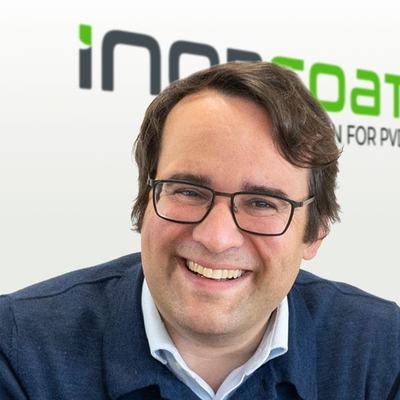
    Romain Waidelich, owner and CEO of INORCOAT, has more than 12 years’ experience within the minting & banknote printing industry and has a profound understanding of related challenges and complications in relation of producing security documents and banknotes.

    Download the slides PDF · 2.1 MB · delegates only

Session 7

Rocking All Over the World

13:40 – 16:05
  1. Coin Usage in Countries with High Inflation Francisco Mandiola, FMA Secure (Chile)
    Francisco Mandiola
    Francisco Mandiola
    Mr. Mandiola is currently head of FMA Corp, a strategic advisory firm that helps both private companies and government entities, primarily in Latin America, with their adaptation to the latest digital, security and business environments. Mr. Mandiola began his career at a lobbying firm in Washington, DC, before entering the banking world at Lloyds Bank and then returning to Chile to Banedwards (now Banco de Chile). He has held a number of executive roles in different companies and was Managing Director of SKY TV, DIRECTV, and Turner/TimeWarner in Chile as well as working for the Chilean government as Managing Director of Casa de Moneda de Chile (Chile’s State Mint and Printing Company). In this last role, Mr. Mandiola was influential in promoting the use of Tax Stamps, which resulted in the eventual adoption of such a system by Chile's Tax Authority. Due to his past experience, Mr. Mandiola is a frequent invited speaker at international conferences, as well as a registered consultant for ITSA (International Tax Stamp Association) and Reconnaissance International. Mr. Mandiola holds degrees from Georgetown University in Washington, DC, and the University of California at Irvine, as well as political studies at the University of Essex. In 2019, Mr. Mandiola was certified as a board member by the Universidad de Los Andes in Santiago.

    Download the slides PDF · 1.2 MB · delegates only

  2. Coin Distribution in Pakistan Aftab Baloch, FTO / FBR (Pakistan)
    Abstract

    The history of coins in Pakistan is rich and diverse, reflecting the region’s long and complex history. Pakistan has released a number of memorial coins over the years to observe important occasions or pay tribute to well-known personalities and celebrities. At present, like many countries, Pakistan has seen a shift towards digital payments, reducing the reliance on physical coins and notes. However, coins continue to contribute in country’s currency system, particularly for smaller transactions and orange train, utility stores and metro etc.

    Coins distribution in Pakistan typically follows a structured model involving various stakeholders. The State Bank of Pakistan (SBP) serves as the central bank of the country and places indent of coins to be manufactured every year by the Pakistan Mint Lahore which is solely responsible for minting coins. Pakistan Mint is a autonomous entity under Finance Department of Government of Pakistan. After partition, this Mint which was earlier named as His Majesty’s Mint was renamed as Pakistan Mint and since then it is manufacturing coins against the demand from the State Bank of Pakistan which is based on various factors including the market demand etc.

    The State Bank of Pakistan monitors the circulation of coins and may adjust coin production and distribution levels based on demand. The demand is forecasted by the combination of key factors including analysis of past coin usage patterns, economic indicators and demographic factors. By effectively managing the supply of coins, the central bank aims to ensure an adequate supply for circulation while minimizing hoarding, as such, there hasn’t been shortage crisis of coins largely because people are hesitant in using them. Multiple factors such as devolution, inflation and inconvenience to carry etc. (the figures of manufacturing and distribution of coins during the last three years will be mentioned and explained in the article/power point presentation).

    The advancements in technology and changes in consumer behaviour may lead to a gradual decline in the use of physical coins. There aren’t perse programs presently being pursued by the SBP but on the other hand SBP encourages the banks to withdraw coins. The Orange Train, Green Line Buses and Metro etc which have the ticket that costs in odd multiples of 5. So there is a stable market
    demand because of such entities. On the other hand Utility Stores, are a significant customers of coins.

    The State Bank of Pakistan (SBP) needs to adopt the smart strategies to encourage the use of coins, Issuing commemorative coins containing the pictures of important personalities can also encourage the collection and circulation of coins among enthusiasts and collectors. These coins may be purchased as keepsakes or gifts, contributing to the overall circulation of coins in the economy.

    Aftab Baloch
    Aftab Baloch
    Mr. Aftab Anwar Baloch is a retired senior officer of Pakistan. He has served 35 years in the Government of Pakistan and 05 years in the Sindh Government (a Province of Pakistan). He possess diversified experience and knowledge in the financial discipline and taxation matters. He is an expert on tobacco taxation and has worked with WHO / FBR on a Research Project, FCTC and The Protocol to Eliminate Illicit Trade in Tobacco Products and related matters. During Pakistan Government Service he supervised monitoring and implementation of monetary and financial policies of Pakistan Government. As a Director on the Board of Directors of the National Bank of Pakistan ( a government bank) he contributed on all the matters relating to banking policies including currency and bank notes circulation. Pakistan Mint, a single entity dealing with coin production also came under his preview while working in Finance Division. He is the Advisor on the Advisory Board of Tax Stamps and Traceability News and is the author of numerous articles relating to Bank Notes, Currency and Cash related issues, Tax Stamps, Track and Trace System, High Security Documents, Climate Change etc. He is a regular speaker on various Conferences and forums organized by M/s Reconnaissance International Cash Essentials, Currency Research etc.

    Download the slides PDF · 1.1 MB · delegates only

  3. Collaboration between Mints and Issuing Authorities José Luis Orozco, FNMT (Fabrica Nacional de Moneda y Timbre - Real Casa de la Moneda) (Spain)
    Abstract

    The presentation discusses the different ways in which the Royal Mint of Spain has collaborated with other mints and coin-issuing entities around the
    world. Focuses on the experiences, learnings and opportunities these collaborations presented.

    José Luis Orozco
    José Luis Orozco
    I have spent the last 20 years of my professional career in the Commercial Department of the Royal Mint of Spain, in the area of Commemorative Coins, first as Head of International Wholesale, then as Head of Retail Sales and, currently, as Head of Collector Coins. My previous experience as responsible for the acquisition of raw materials and tools for the minting of coins, both for circulation and collectors, has given me a valuable experience for my subsequent positions in the commercial area.

    Download the slides PDF · 1.6 MB · delegates only

  4. Promoting Coin Recirculation Through Automation of Cash Handling Zodwa Nkambule, Central Bank of Eswatini (Eswatini)
    Abstract

    As part of its strategic objective of enhancing coin handling efficiencies, the Central Bank of Eswatini, launched the Coin Management Efficiencies Project to promote coin recirculation through automation of cash handling. The project addresses challenges such as coin hoarding and high minting costs, by introducing coin vending machines and counting/sorting systems. These machines, deployed in collaboration with commercial banks and retailers at strategic locations, provide the public with an easy, accessible way to deposit and use coins for purchases. The initiative has significantly improved public coin deposit and recirculation, reduced coin hoarding, and streamlined coin management for retailers and banks. By alleviating the burdens of manual coin handling, the project enhances coin handling efficiency. It promotes a sustainable coin recirculation framework, contributing to the overall economic stability of the Kingdom of Eswatini.

    Zodwa Nkambule
    Zodwa Nkambule
    Zodwa Nkambule is a seasoned financial professional with over 18 years of experience spanning financial management, banking and currency operations. Currently serving as Deputy Director Operations: Currency & Banking at the Central Bank of Eswatini. Zodwa plays a pivotal role in ensuring efficient management of currency and banking within the country. Her expertise supports financial stability and contributes to shaping Eswatini’s monetary policy. Zodwa is deeply passionate about innovation and technological advancements in banking and cash management. With a strong foundation in banking and financial management, Zodwa continues to drive impactful change in the financial sector.

    Download the slides PDF · 1.5 MB · delegates only

  5. The Mint Directors Association – The Next Chapter for the Global Coin Community Marie Lemay, Royal Canadian Mint (Canada)
    Abstract

    The MDA is a membership-based organisation at the heart of the global minting community that was created for the benefit of the entire industry. It acts as a hub to share relevant information, exchange knowledge and create opportunities to enrich relationships. The presentation will highlight recent work and plans for the MDA to further enhance connections across the minting community.

    Marie Lemay
    Marie Lemay
    Marie Lemay is the President and CEO of the Royal Canadian Mint, a position she has held since 2019. Before assuming her position at the Mint, Ms. Lemay served as Deputy Minister and Deputy Receiver General for Canada at Public Services and Procurement Canada. Ms. Lemay also served as Deputy Minister and President of the Canada Economic Development Agency for Quebec Regions, which promotes the long-term Economic development of the regions of Quebec. In 2012, she was Associate Deputy Minister at Infrastructure Canada, the main department responsible for federal efforts to enhance Canada's public infrastructure. From January 2008 to 2012, Ms. Lemay was the CEO of the National Capital Commission in Ottawa. Prior to that, Ms. Lemay was the CEO of Engineers Canada, where she led a number of international initiatives and oversaw several mutual recognition agreements. Recently, Ms. Lemay was elected as the first Chairperson of the Mint Directors Association. In 2023, she was awarded an Honorary Doctorate from the University of Ottawa, her alma mater, for her substantial contribution to the field of engineering and to society at large. Ms. Lemay is a member of the Ordre des ingénieurs du Québec and of Professional Engineers Ontario, as well as a Fellow for both Engineers Canada and the Canadian Academy of Engineering. She also serves as a board member of the Richelieu Hardware Ltd. Board of Directors.

    Download the slides PDF · 85.7 MB · delegates only

Session 8

Panel Discussion

16:05

Programme subject to change. Want to speak or suggest a session?

Get in touch
The Coin Conference

Register your interest

Areas of interest